
The chick (avian) inner ear can naturally regenerate sensory hair cells and is therefore an ideal candidate for investigating mechanisms leading to hair cell regeneration and functional recovery. Here, Stefan Heller, Ph.D., and team present a surgical protocol for eliminating avian auditory hair cells via sisomicin injection into the inner ear’s lateral semicircular canal. Sisomicin is an aminoglycoside antibiotic.

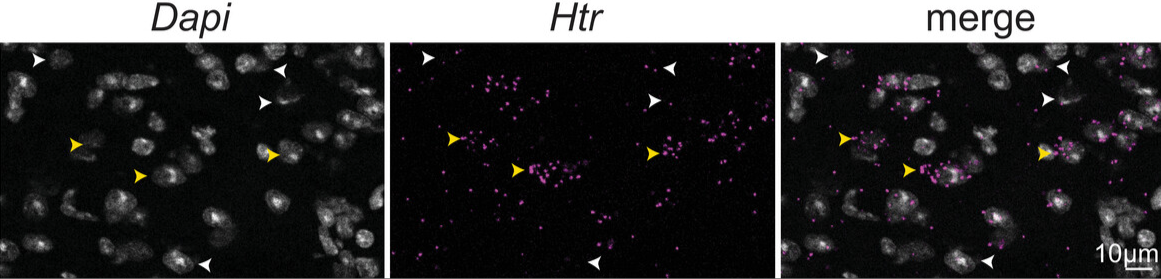
This graphic details the protocol, starting with the infusion of ototoxin into the chicken inner ear, then the vibratome sectioning of the chicken basilar papilla, followed by the multiplexed mRNA detection in inner ear vibratome sections, and the combination of mRNA and protein detection or S-phase tracing using a thymidine analog. Credit: Sato, Huang, Heller, and Benkafadar/STAR Protocols
They also explain how to detect multiple types of mRNA in specific parts of the chick inner ear and how to combine this with techniques to see both mRNA and proteins at the same time. Additionally, they include a method to label cells that are dividing.
This protocol, which the team published in STAR Protocols in June 2024, was used in two recent papers, the first published in Developmental Cell in December 2023 and a related paper published in Cell Reports in March 2024.

This is adapted from the summary for the STAR Protocols paper. Hearing Restoration Project member Stefan Heller, Ph.D., is a professor of otolaryngology–head & neck surgery at Stanford University. He is also a 2001–2002 Emerging Research Grants scientist.
The Latest Blog Posts


Hearing loss doesn’t have to be the end. It can feel like it, but it doesn’t have to be. Music is still possible. Life is still possible. There are ways to regain control, ways to find your own authorship through understanding. I want people to know that.